focail: Irish for words
Irish cottage glossary: the words of the house and the hearth
The short answer
The words of the Irish cottage, in plain English: parts of the house (half-door, hearth, outshot), its furniture (settle bed, press bed, dresser), the thatch (scollop, scraw, súgán), the fuel (turf), and the social life around it (céilí, seisiún, craic). 17 terms, A to Z.
Focal an lae17 terms
súgána rope twisted from straw or hay, to tie thatch and seat chairs
- Half-doorthe split door
- Scrawsod under the thatch
- Seisiúna music session
What do Irish cottage words mean?
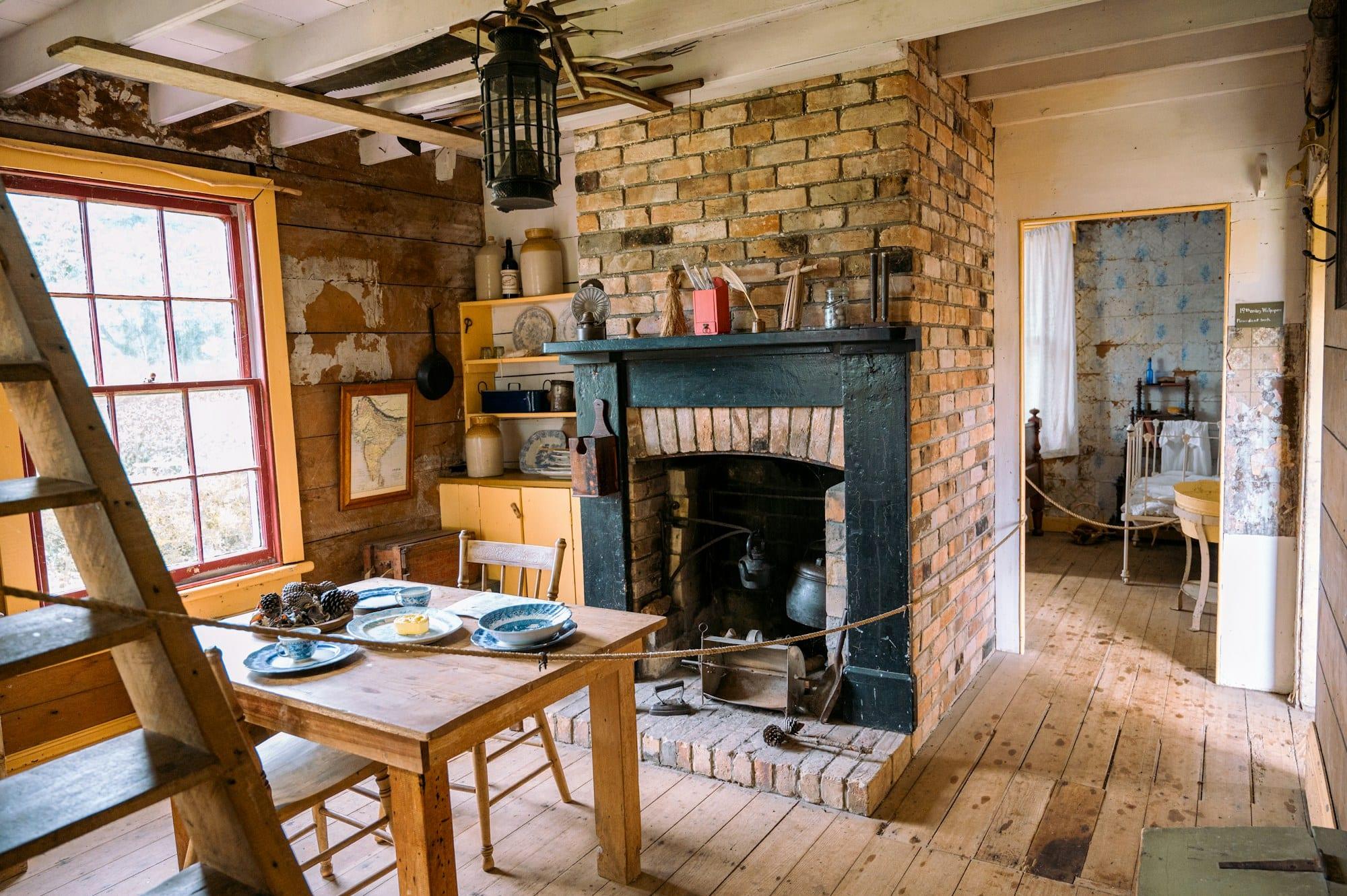
Most of these words describe a house built around one fire: a kitchen with a hearth, a settle and a dresser, a half-door to the yard, and a thatched roof tied with súgán over scraw. The social words, céilí, seisiún and craic, describe what happened around that fire.
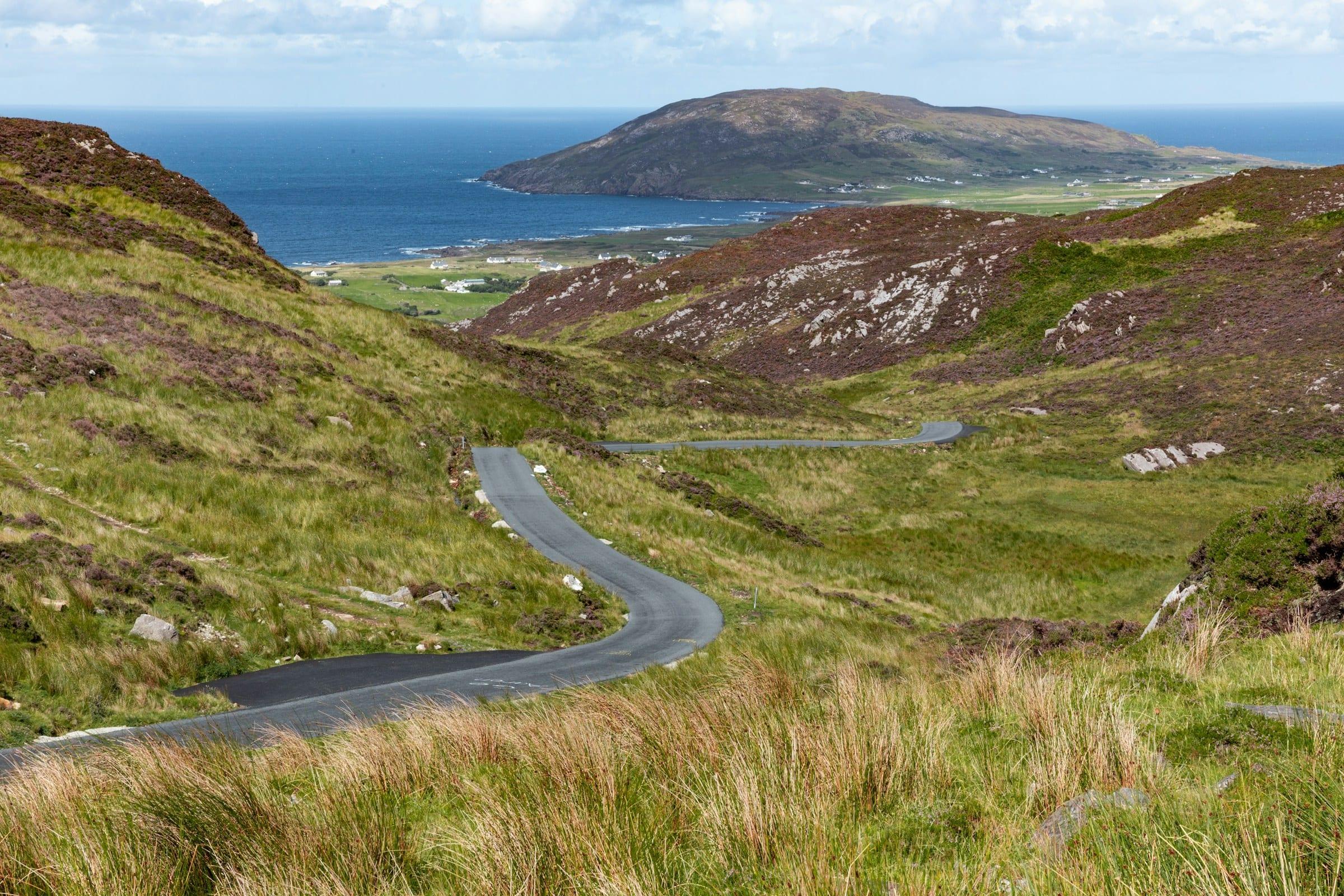
- Boreenfrom Irish bóithrín, a little road
- A narrow country lane, often single-track between stone walls or hedges; the usual last stretch to a rural cottage. Driving to a cottage →
- CéilíKAY-lee
- A social gathering with traditional music and group dancing. In older usage it also meant an evening visit to a neighbour's house to talk and tell stories by the fire.
- Craiccrack
- Fun, news and good company, as in "What's the craic?" The word came into Irish from English "crack" and is now usually spelt the Irish way.
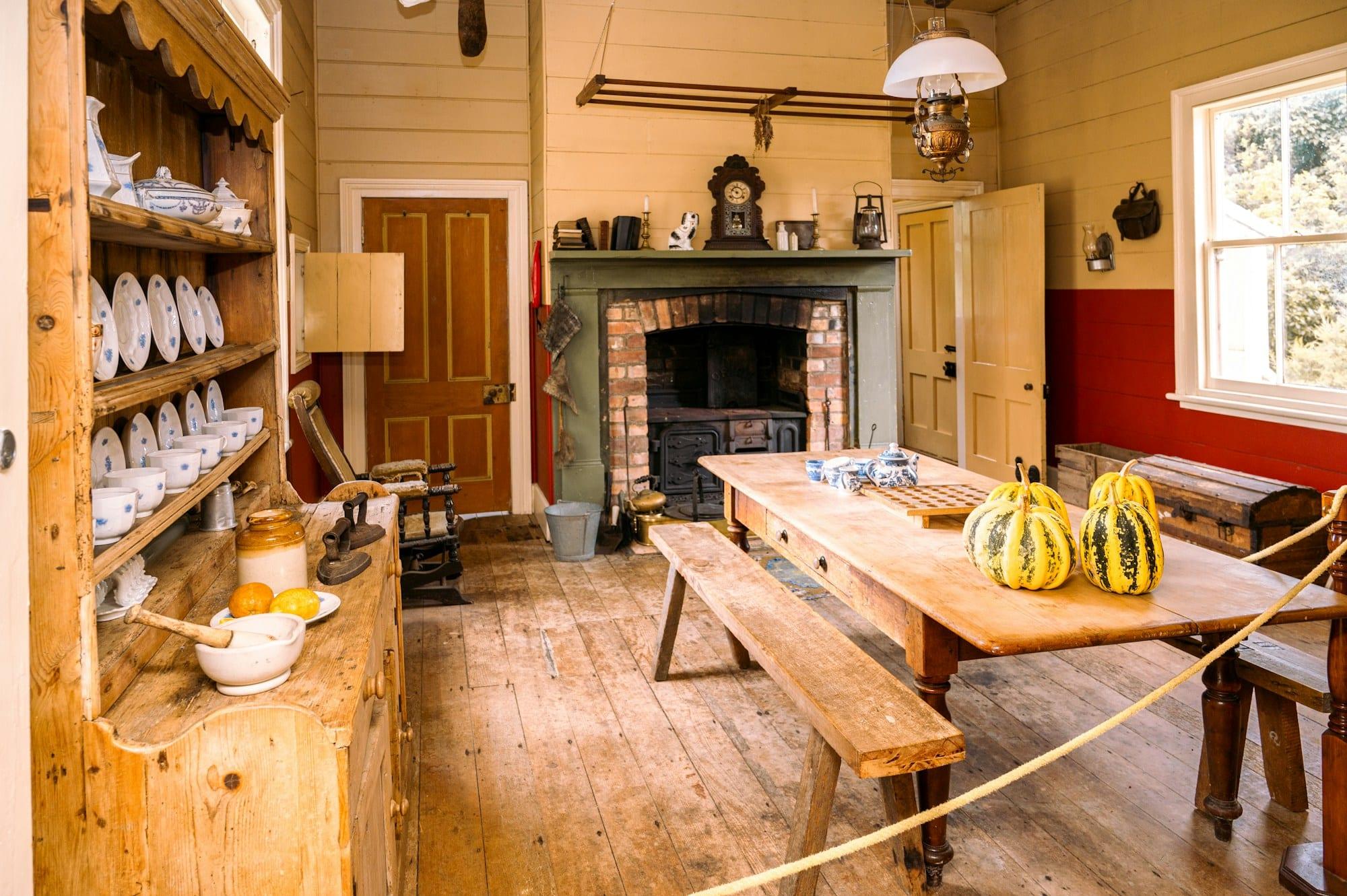
- Dresser
- A tall kitchen cupboard with open shelves above, used to display the household's plates and jugs; a fixture of the traditional kitchen. Inside the cottage →
- GaeltachtGALE-tockt
- An area where Irish is the community language, found in counties including Donegal, Galway, Mayo and Kerry. Road signs there may show place names in Irish only.
- Half-door
- A door split across the middle, so the top leaf can open for light and air while the bottom leaf stays shut. The half-door →
- Hearth
- The fireplace and the floor in front of it, at the centre of the traditional kitchen, where cooking, heat and company met. The hearth →
- Limewash
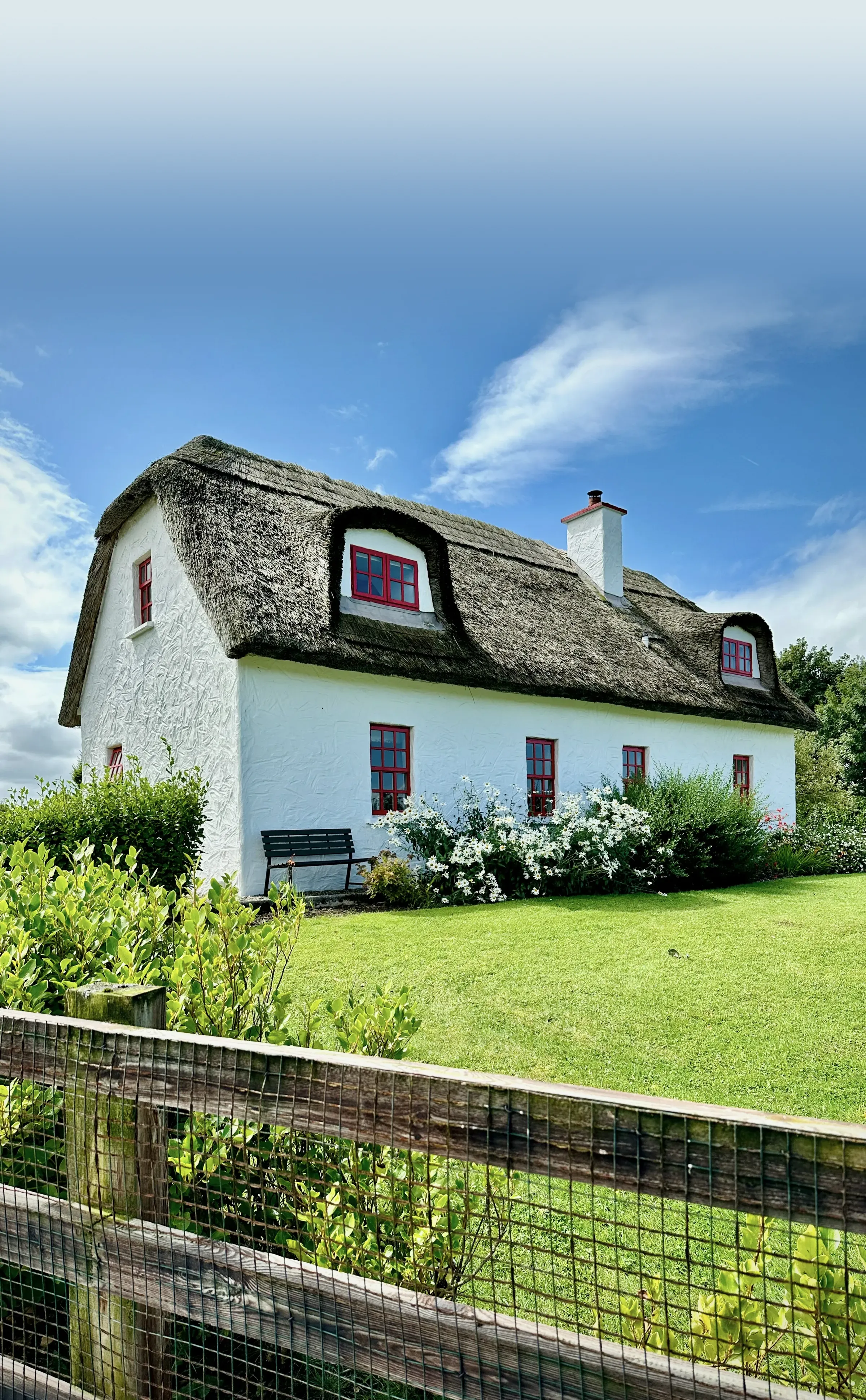
- A thin coat of lime (sometimes made from seashells) brushed on walls; traditionally renewed every year, one coat lasting about a year. The thatched cottage →
- Outshot
- A small recess built out from the kitchen wall beside the hearth, holding a bed, often used by the oldest member of the family.
- Press bed
- A bed that folds up into a cupboard (a press) during the day to save space.
- Scollop
- A long, bent hairpin rod of hazel or willow used to pin the outer coat of thatch into the layers beneath.
- Scraw
- Long strips of cut sod laid under the thatch in the west and north of Ireland, about 20 to 30 mm thick, for insulation, grip and fire resistance.
- SeisiúnSESH-oon, a session
- An informal gathering of musicians playing traditional tunes together, usually in a pub; listeners are welcome, talking over the music less so.
- Settle bed
- A long wooden seat by day that opens into a bed at night, usually kept in the kitchen. Settle and press bed →
- SúgánSOO-gawn
- A rope twisted from straw or hay, used to tie scraw and thatch to the roof and to make the seats of súgán chairs.
- Townland
- The smallest traditional land division in Ireland; rural addresses often name the townland, which helps find a cottage.
- Turf
- Peat cut from bogs and dried, the traditional fuel of the Irish hearth; some cottages still burn it. Fuel and the fire →
Why does this site use Irish words?
Because many of the words for the cottage and its life come from Irish, and county names have Irish forms you will see on road signs, especially in the Gaeltacht. Each page carries one Irish word, with its meaning beside it: tuí for thatch, teachín for a cottage, bóthar for road.
For spellings and meanings we check Foras na Gaeilge’s New English-Irish Dictionary at focloir.ie.
Sources
- 1Traditional Irish Architecture FAQsNational Museum of Ireland, checked November 2026
- 2Thatch: A Guide to the Repair of Thatched Roofs (Advice Series)Department of Arts, Heritage and the Gaeltacht, 2015
- 3New English-Irish DictionaryForas na Gaeilge (focloir.ie), checked November 2026
Checked . Facts change after we check them: confirm prices, rules and opening times with the company or official body before you book. How we check facts · Disclaimer